Product

Hayati AI Nexus Product Modules: Complete Healthcare Operating System

Hayati AI Nexus combines AI reception, appointment management, queue workflows, doctor operations, GST billing, pharmacy inventory, TPA workflows, and patient retention automation on one offline-capable operational platform.

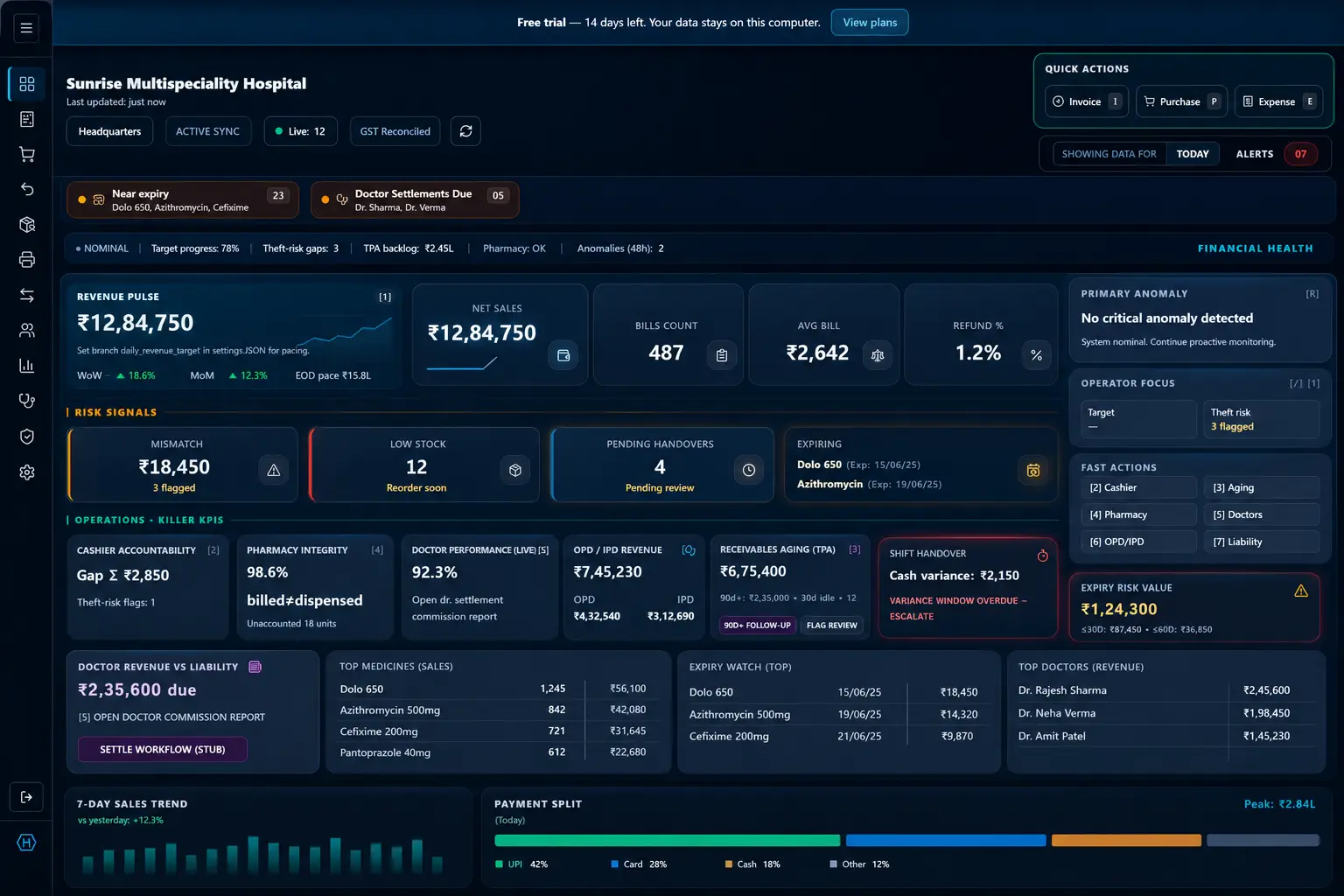
Hayati admin operational dashboard — real product interface with branch KPIs and TPA aging
Admin HQ dashboard
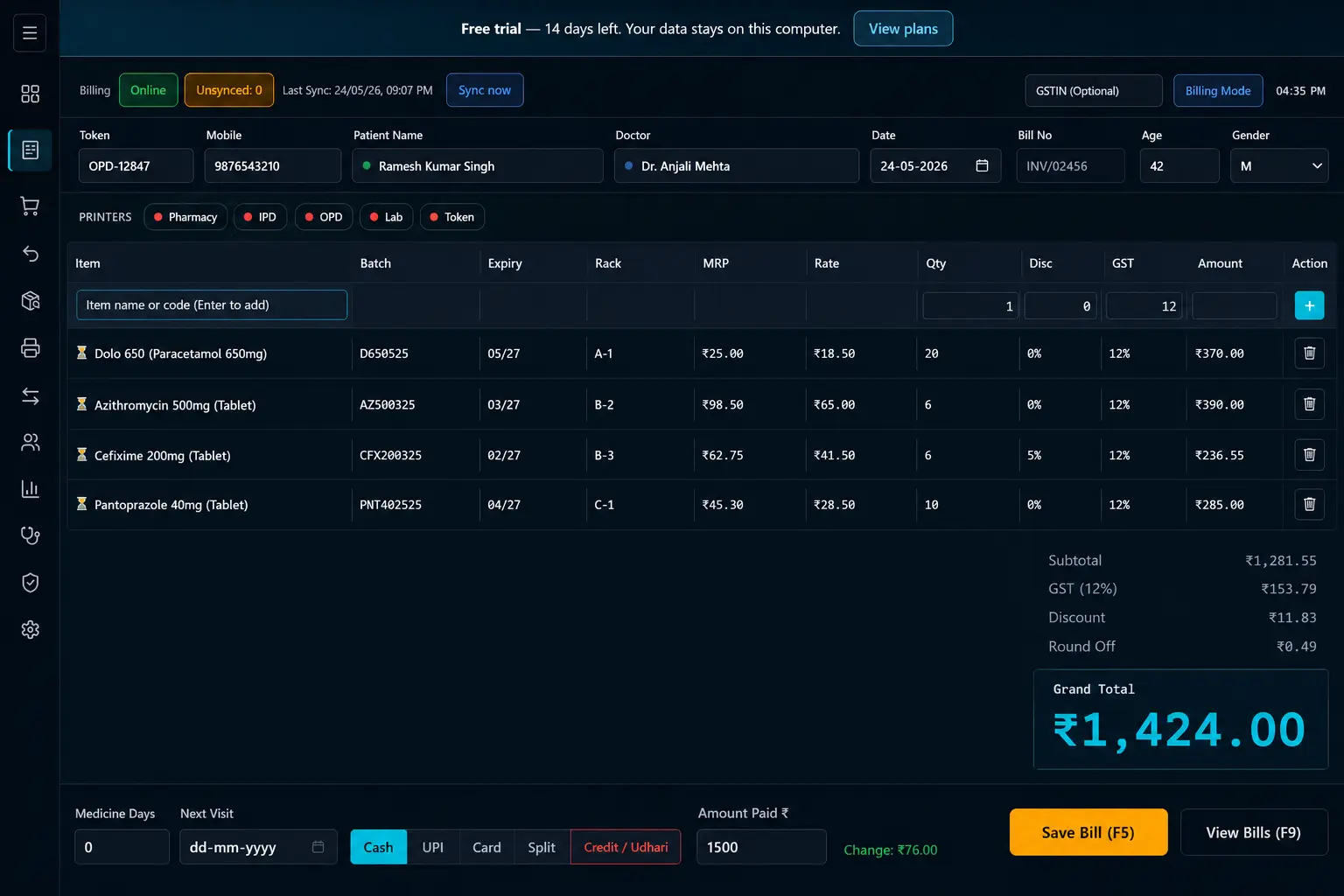
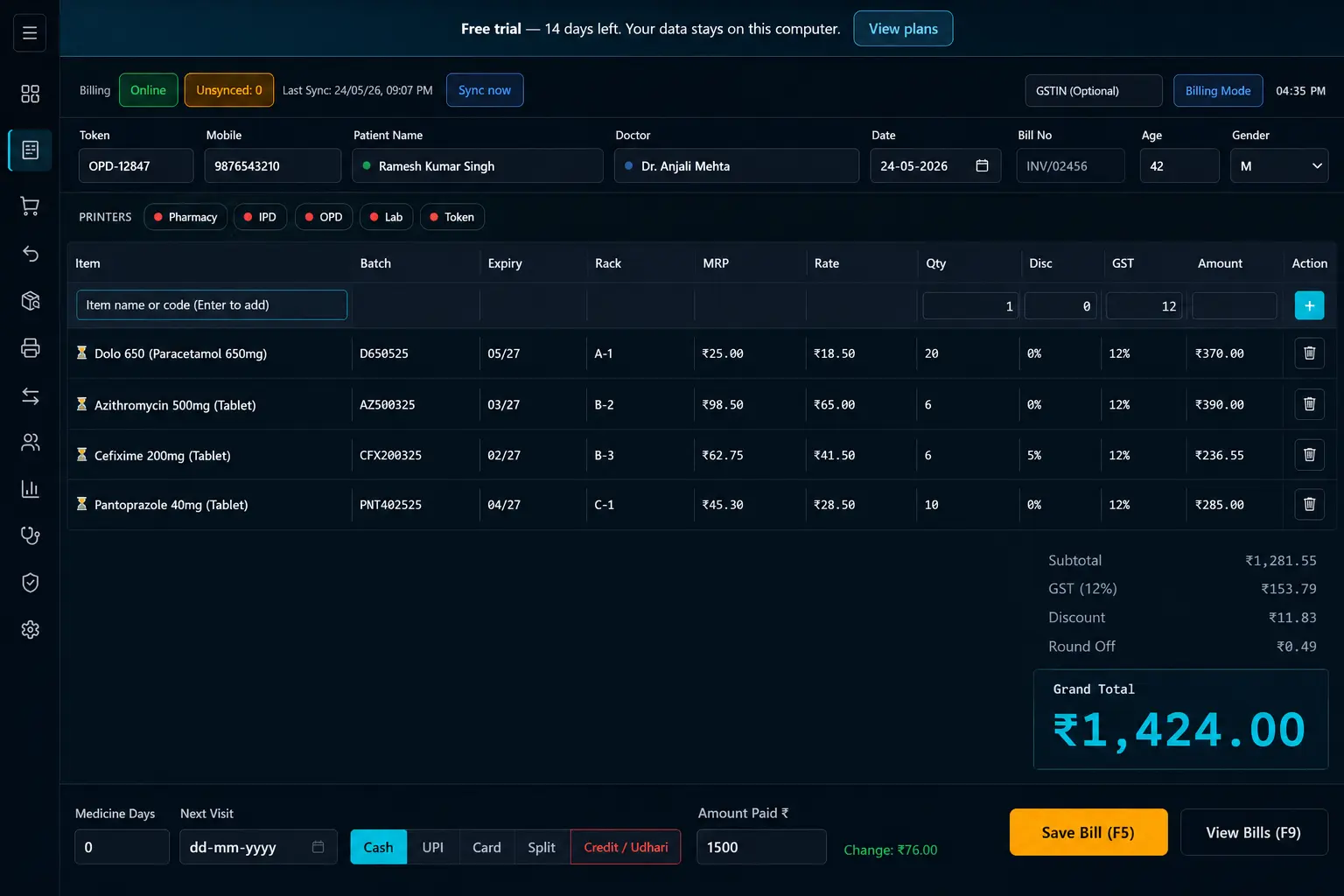
Hayati GST billing counter — multi-rate tax lines, batch/FEFO context, thermal and A4-ready invoice workflow
Smart Billing
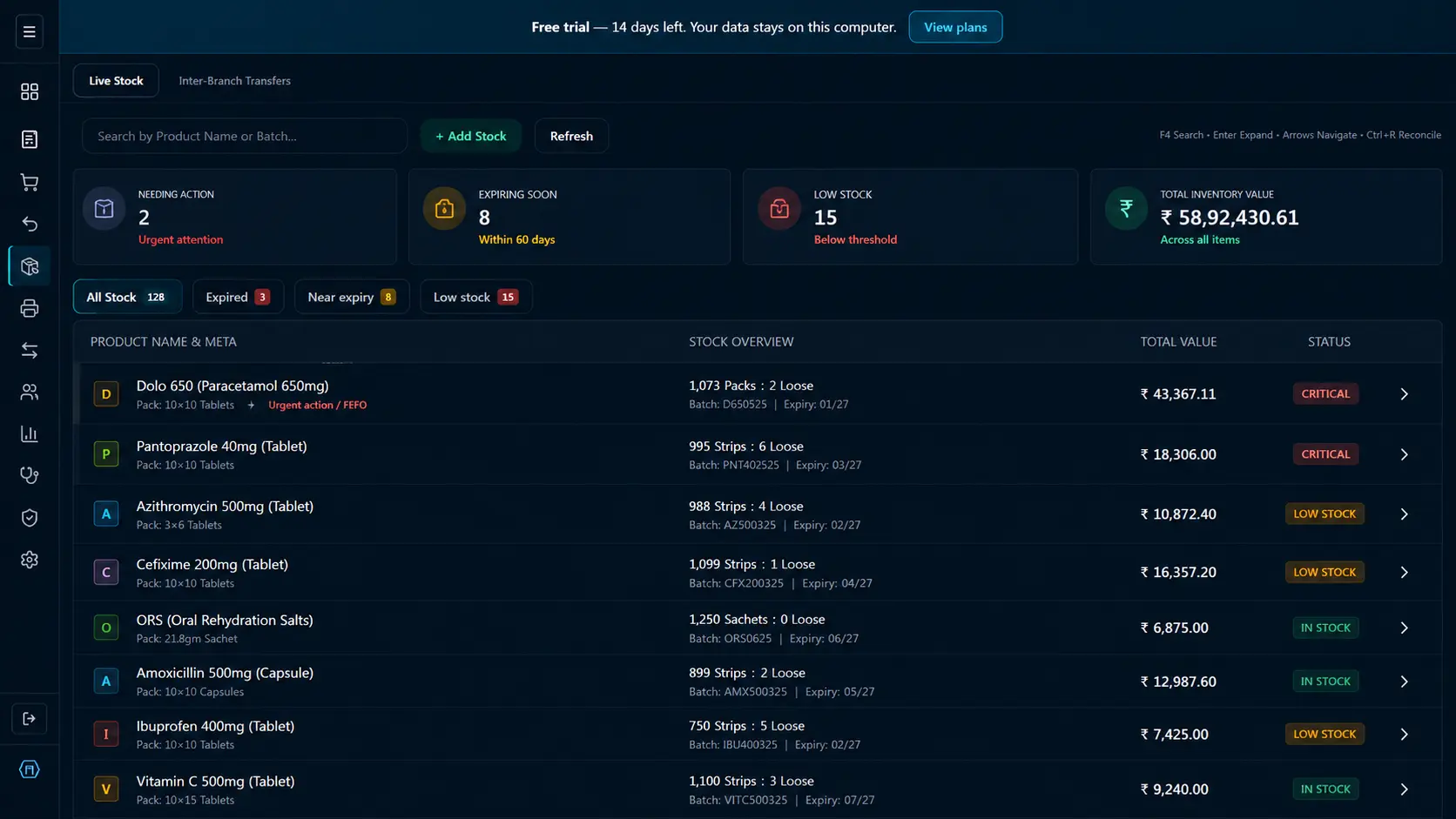
Hayati pharmacy inventory — FEFO stock, expiry visibility, and barcode-ready product lines
Pharmacy ERP
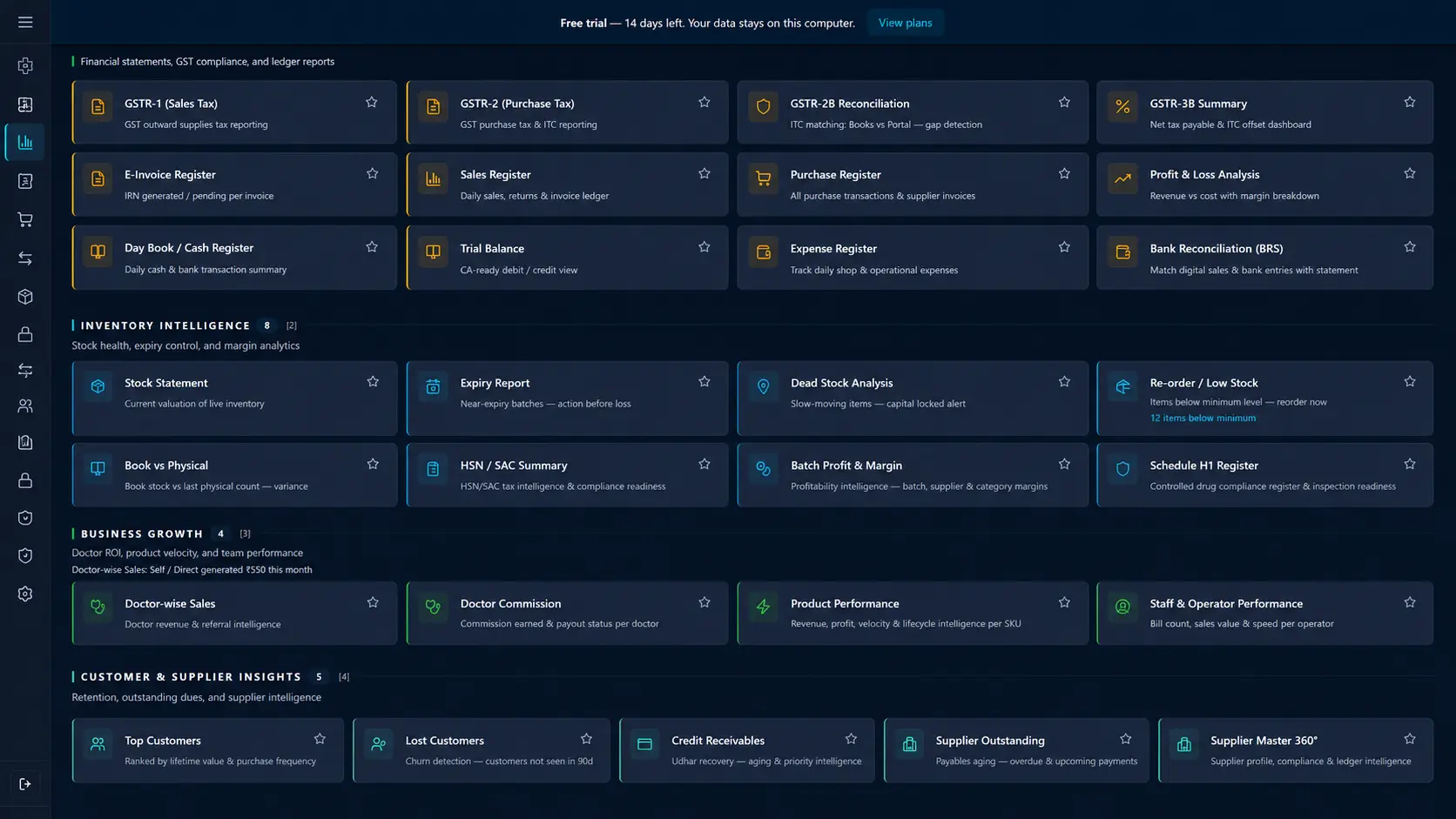
Hayati Reports hub — GSTR, inventory, and operational report tiles from the live product
Reports & Analytics
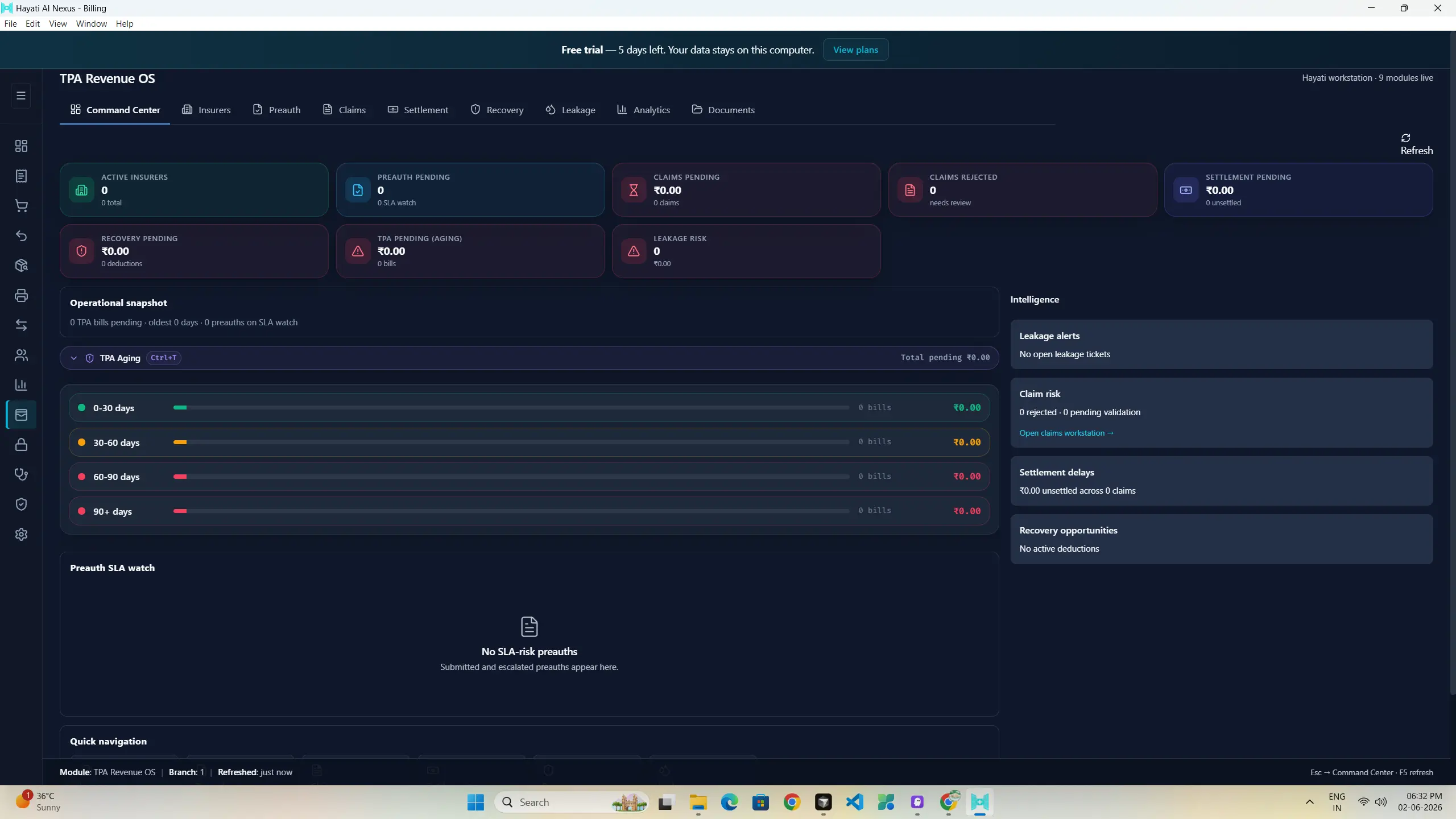
Hayati TPA workstations — pre-auth, claims, and settlement aging on one operational spine
TPA Revenue OS
Hayati offline-first billing counter — local bill/print/stock with sync status when disconnected
Offline billing
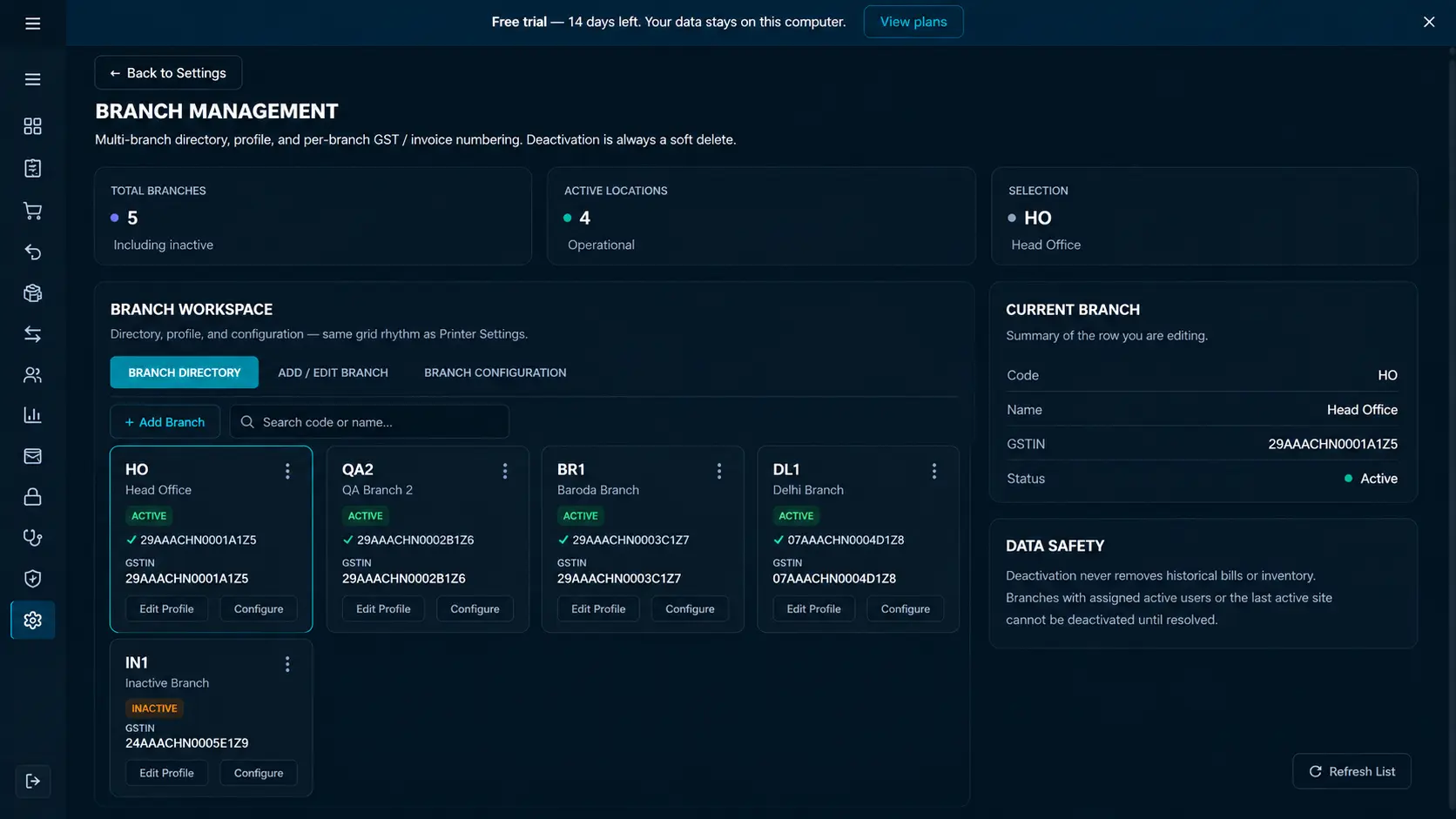
Hayati multi-branch headquarters view — branch governance, quotas, and transfer visibility when entitled
Multi-branch HQ
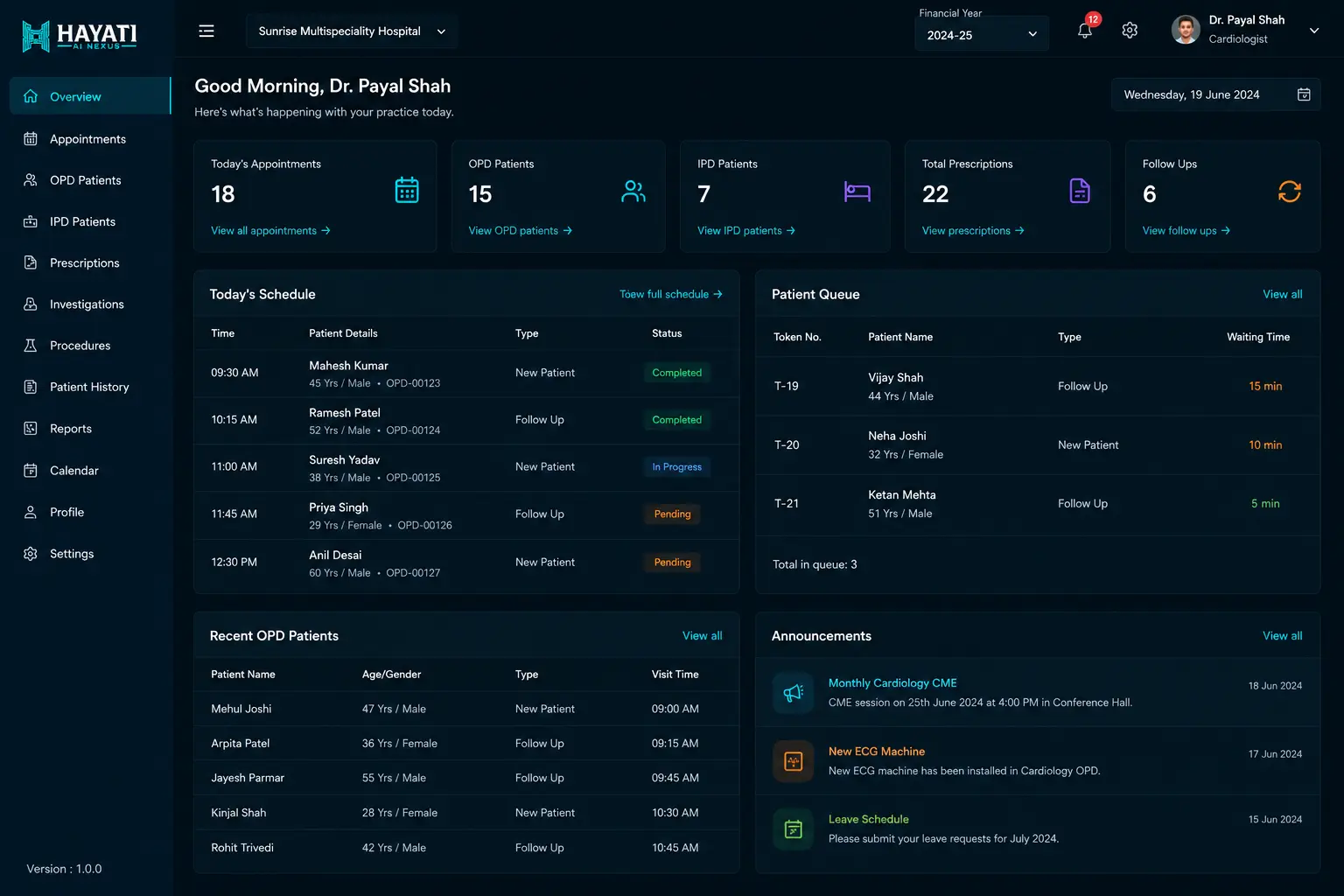
Hayati doctor operations surface — queue context and clinical handoff (not a full EMR claim)
Doctor operations
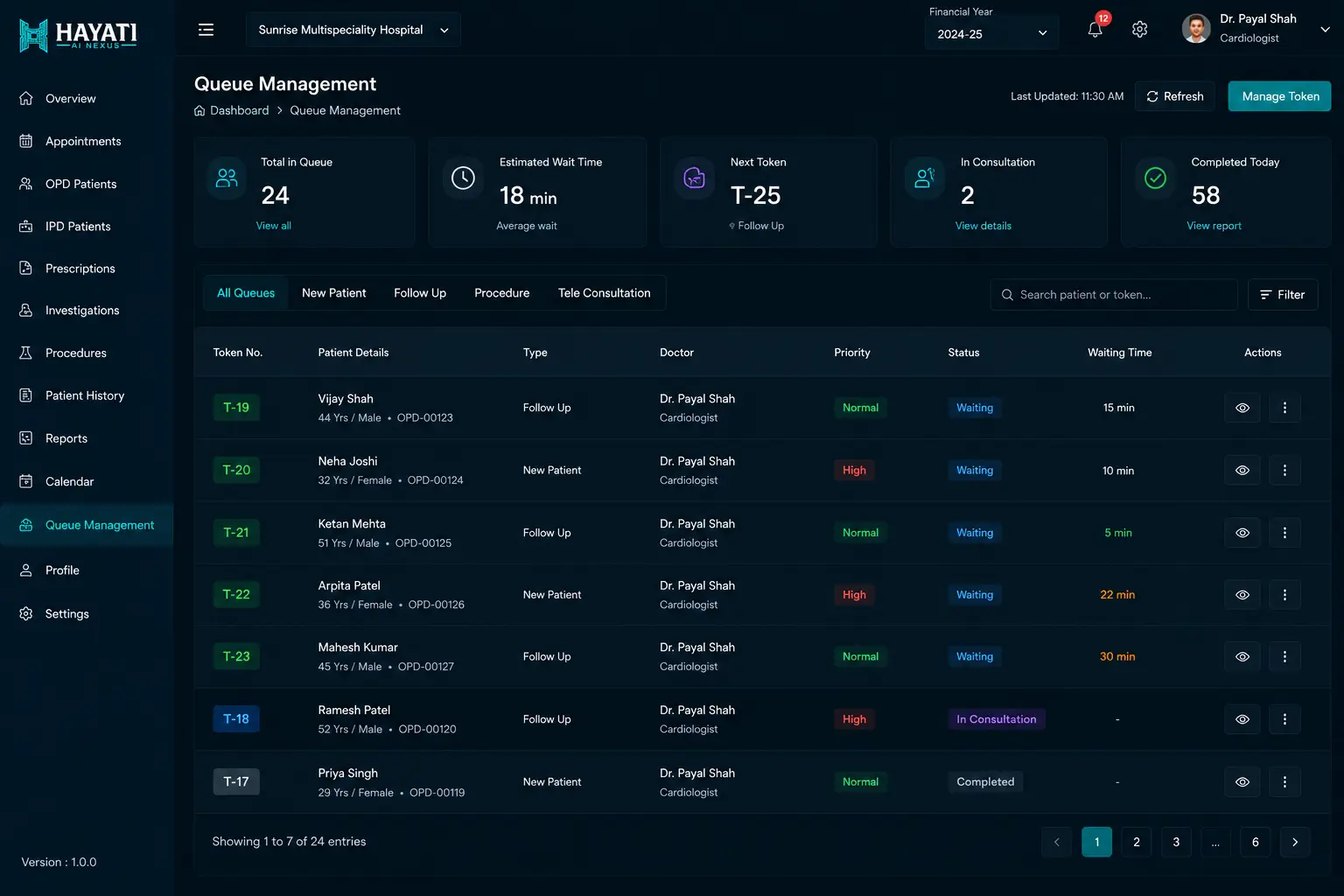
Hayati OPD queue and token order — token slip and status spine for reception counters
Queue & token workflows

Real Hayati ERP interface (staging demo data). Book a walkthrough for your branch layout.

Product Overview: One Platform, Every Department Connected

Hayati AI Nexus combines AI reception, appointment management, queue workflows, doctor operations, GST billing, pharmacy inventory, TPA workflows, and patient retention automation on one offline-capable operational platform. Reception, queue, doctor workflow, pharmacy billing, TPA reconciliation, and retention share one operational spine with governed sync when you enable cloud services. Departments stop re-keying patient context into parallel tools. Indian hospital groups, polyclinics, and pharmacy chains evaluate modules together so pilots reflect real payer mix, branch layout, and counter discipline.

AI Receptionist Module

Answers inbound calls in local Indian languages, captures appointment intent, sends confirmations, and hands off to the Physical Appointment Dashboard. Emergency cases escalate to staff — Hayati does not pretend AI replaces triage. Language packs and escalation rules are configured during onboarding so midnight calls still land in reception's morning queue with context.

Physical Appointment Dashboard Module

Reception sees AI bookings, walk-ins, and phone appointments in one view. Check-in, status updates, and reminders connect to the Patient Queue Display so waiting areas stay calm. Color-coded status helps triage no-shows and late arrivals without a separate notebook.

Patient Queue Display Module

Waiting-room screens show token numbers, doctor names, and estimated wait times updated from reception workflows — reducing desk crowding and repeated questions. Clinics mount displays on a single TV; hospitals may use multiple screens per OPD floor.

Doctor Dashboard Module

Physicians see today's queue, history, prescriptions, and billing flags on one screen before the patient enters. Digital prescriptions can flow to pharmacy and billing when enabled — full clinical EMR depth is scoped on walkthrough. The dashboard aligns with Patient Queue Display so doctors know who is waiting without shouting across the OPD hall.

Pharmacy Billing and Inventory Module

GST-shaped billing with FEFO batch discipline, Schedule H/H1 workflows, barcode labels, and hospital or retail pharmacy counters on the same spine as ward billing. Purchase, purchase-return, transfer, expiry/dead-stock, and udhari or credit party events stay tied to batches so margin and expiry reviews describe the same stock your pharmacist sold. Thermal print and cash-drawer paths are scoped with counter hardware during rollout.

TPA and Insurance Billing Module

Hospital-side pre-auth context, settlement tracking, and aging views align pharmacy bills with finance before portal submission. Payer-specific rules are configured during onboarding. Pharmacy and finance teams review the same patient and bill context before chasing portals — reducing month-end surprises when a ward return was not reflected in the claim file.

GST and E-Invoice Compliance Module

Multi-rate GST lines, HSN mapping, sales and purchase registers, and GSTR-1 / GSTR-2 / GSTR-3B–oriented exports for Indian tax workflows — plus GSTR-2B reconciliation views where entitled and e-Invoice IRN when your GSTIN policy requires it. Your CA should validate sample invoices during pilot; Hayati strengthens counter discipline but does not replace statutory filing judgment.

AI Retention Agent Module

Governed follow-up workflows for chronic care and missed visits with human escalation. Confirmed appointments land in the Physical Appointment Dashboard when patients agree.

Offline-First Architecture

Counters record bills and stock locally first; governed sync runs when connectivity returns. Designed for ward floors, basement pharmacies, and unstable broadband. AI Receptionist intent can queue locally where enabled, then sync when the link is stable — scope is confirmed per site.

Multi-Branch Management Module

Branch-scoped operations with HQ visibility for stock, sales, and exceptions. Inter-branch transfers and central purchasing are configured during rollout. Role-based access keeps branch managers in their facility while leadership sees governed aggregates — not a single shared login with trust-based fixes.

Integration APIs and Third-Party Connectors

LIS, PACS, accounting, and government portal integrations are scoped per deployment — Hayati documents what is live for your stack rather than listing vaporware connectors. API projects start after discovery when your IT team shares interface docs and test credentials.

Security, Backups, and Compliance Certifications

Role-based access (RBAC), session controls, audit tooling, and Security Command Center surfaces for admins support procurement review. Local backup profiles use dual-control restore so one person cannot silently overwrite production databases — backup is not the same as cloud sync. Certifications and SLAs are shared during enterprise evaluation, not invented on marketing pages; see /security for engineering practices your IT team can review before sign-off.

Hayati OS vs Marg ERP, Practo, and TallyPrime

  • AI Receptionist (local languages)

    Hayati: Native, governed

    Marg: No

    Practo: Basic booking

    Tally: No

  • Physical Appointment Dashboard

    Hayati: Full reception OS

    Marg: No

    Practo: Yes

    Tally: No

  • Patient Queue Display

    Hayati: Native waiting-room

    Marg: No

    Practo: No

    Tally: No

  • Doctor Dashboard

    Hayati: Operational context

    Marg: No

    Practo: Limited

    Tally: No

  • AI Retention Agent

    Hayati: Governed outbound

    Marg: No

    Practo: No

    Tally: No

  • Hospital ERP depth

    Hayati: Connected OS modules

    Marg: Partial retail

    Practo: No

    Tally: No

  • TPA billing alignment

    Hayati: Hospital-side workflow

    Marg: Manual

    Practo: No

    Tally: No

  • GST pharmacy multi-rate

    Hayati: Counter + inventory

    Marg: Yes

    Practo: No

    Tally: Yes

  • Offline mode

    Hayati: Local-first counters

    Marg: No

    Practo: Internet-dependent

    Tally: Limited

  • FEFO inventory

    Hayati: Batch at billing

    Marg: Basic

    Practo: No

    Tally: No

Frequently asked questions

Is Hayati a single module or a full Healthcare OS?
Hayati AI Nexus is a Healthcare Operating System connecting reception, queue, doctor workflow, billing, pharmacy, TPA, and retention modules on one spine.
Which modules are included in the base product?
Core billing, inventory, queue, and branch context are standard; AI Receptionist, Retention Agent, and integrations are scoped per deployment during onboarding.
Does the product include clinical EMR?
Hayati focuses on operational hospital and pharmacy workflows. Clinical EMR depth is discussed honestly on walkthrough — we do not overclaim.
How does Hayati compare to Marg ERP?
Marg excels at desktop pharmacy retail accounting. Hayati adds OS modules — AI reception, queue display, TPA alignment, and governed multi-branch sync.
How does Hayati compare to Practo?
Practo focuses on discovery and appointments. Hayati targets in-clinic billing, pharmacy, queue, and TPA after the patient arrives.
Can I buy only one module?
Licensing is modular in discussion, but the OS value is connectivity — walkthroughs clarify which modules you need day one.
Is offline mode available for all modules?
Billing and stock are offline-first; cloud dashboards and AI services activate when connectivity and license scope allow.
What integrations are supported?
LIS, PACS, and accounting connectors vary by customer — bring your interface list to the walkthrough.
Where do I see pricing?
Visit /pricing for desktop license tiers; enterprise scope is confirmed after discovery.
How do I start a pilot?
Book a walkthrough at /contact or begin license checkout at /get-started after plan selection.